
Emergency Water Cleanup Newport Beach
Emergency water cleanup in Newport Beach may be needed when standing water, spreading moisture, broken pipes, slab leaks, appliance failures, roof intrusion, flooding, overflowing fixtures, sprinkler-line failures, or other unexpected water intrusion affects a property. Water can move through drywall, flooring, cabinetry, insulation, ceiling cavities, subfloors, and concealed structural areas when moisture is not addressed early.
24/7 Restoration provides professional emergency water cleanup for Newport Beach homes, condominiums, townhomes, apartments, waterfront residences, HOA-managed communities, hotels, offices, retail spaces, medical offices, and other commercial properties. Our team uses commercial water-extraction equipment, professional moisture-detection tools, structural-drying systems, and documented mitigation procedures to help stabilize affected areas and begin the drying process.
If your property requires broader mitigation, structural drying, moisture detection, or restoration planning, visit our Newport Beach water damage services page for additional information.
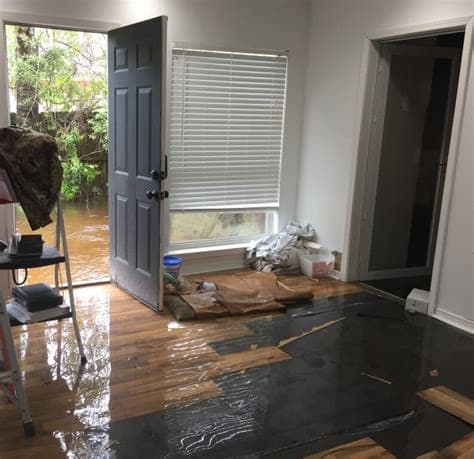
Newport Beach properties may experience emergency water losses associated with plumbing failures, appliance leaks, slab leaks, sprinkler-line failures, roof intrusion, overflowing fixtures, and unexpected exterior water intrusion. Prompt mitigation can help limit moisture migration into surrounding building materials and reduce additional damage.
Call (949) 888-8409 for a free emergency water damage inspection in Newport Beach.
Our Emergency Water Cleanup Newport Beach Process
Emergency water cleanup involves more than removing visible water. Effective mitigation requires identifying moisture migration, extracting standing water, monitoring affected materials, and implementing controlled structural-drying procedures designed to move the property toward appropriate drying goals.
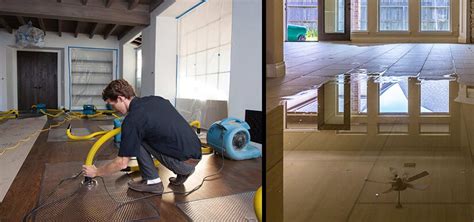
1. Emergency Inspection and Moisture Assessment
A technician evaluates the source of the water intrusion, identifies affected materials, documents moisture conditions, and checks surrounding areas where water may have migrated beyond the visible damage.
2. Water Extraction
Standing water is removed using commercial extraction equipment designed to help reduce further absorption into flooring, drywall, cabinetry, baseboards, subfloors, and adjoining building materials.
3. Moisture Detection and Mapping
Moisture meters, thermal imaging when appropriate, and humidity-monitoring tools help evaluate concealed moisture behind walls, beneath flooring systems, inside cabinetry, above ceilings, and within other enclosed structural areas. Thermal imaging may identify temperature patterns that warrant further evaluation, but direct moisture readings are used to verify damp conditions.
4. Structural Drying
Commercial air movers and dehumidification equipment are placed according to the affected materials, moisture readings, airflow needs, property layout, and overall project conditions. Equipment placement may be adjusted as drying progresses.
5. Monitoring and Documentation
Drying progress is monitored and documented throughout the mitigation process to track moisture reduction, equipment performance, humidity conditions, and the condition of affected materials.
6. Repair Planning
When affected materials require removal or repairs after mitigation, repair planning may include drywall replacement, flooring repairs, cabinetry work, insulation replacement, texture matching, painting, trim installation, or other reconstruction needs. For more information, visit our Newport Beach water damage repair services page.
Water-damage mitigation procedures commonly follow industry guidance such as the IICRC S500 Standard for Professional Water Damage Restoration, depending on project conditions, affected materials, moisture readings, and the category of water involved.
Water Spreading Beyond the Visible Area?
Standing water and concealed moisture can travel beneath flooring, behind drywall, inside cabinetry, above ceilings, and into adjoining rooms. An inspection can help identify affected materials and determine whether extraction, structural drying, and moisture monitoring are needed.
Or call (949) 888-8409.
Common Emergency Water Cleanup Situations in Newport Beach
Emergency water cleanup Newport Beach services may be needed when an unexpected leak, overflow, plumbing failure, or exterior water intrusion affects multiple building materials before the source is identified. Water can migrate beneath flooring, behind drywall, inside cabinetry, above ceilings, and into adjoining rooms, making professional extraction, moisture detection, mapping, and structural drying important.
Common Causes of Emergency Water Damage
- Broken plumbing supply lines
- Slab leaks
- Water heater failures
- Dishwasher, refrigerator, and washing-machine leaks
- Toilet overflows and supply-line failures
- Roof leaks and storm-related intrusion
- Fire-sprinkler and irrigation-line failures
- HVAC-related water leaks and condensation problems
- Exterior water entering through doors, windows, balconies, or wall openings
- Overflowing sinks, bathtubs, showers, and other fixtures
When the source involves HVAC condensation, a clogged condensate line, drain-pan overflow, frozen coils, or ceiling staining near an air-conditioning system, our AC leak water damage Newport Beach page explains how concealed HVAC moisture can affect drywall, ceilings, insulation, flooring, and surrounding structural materials.
Signs Emergency Water Cleanup May Be Needed
- Standing water inside the property
- Visible moisture affecting flooring, walls, or cabinetry
- Water staining on ceilings or drywall
- Warped, buckled, or lifting flooring materials
- Unexpected moisture around cabinets, appliances, or plumbing fixtures
- Soft drywall, swollen baseboards, or deteriorating trim
- Persistent dampness after the visible leak has stopped
- Elevated indoor humidity or condensation
- Water spreading into adjoining rooms or shared walls
Emergency water cleanup may be needed in single-family homes, condominiums, townhomes, apartments, waterfront residences, HOA-managed communities, hotels, offices, medical offices, retail spaces, commercial properties, and other managed facilities throughout Newport Beach. The appropriate response depends on the source and category of water, the materials affected, the length of exposure, and how far moisture has migrated beyond the visible area.
If delayed drying has resulted in musty odors, visible growth, or suspected contamination, our Newport Beach mold services can help evaluate moisture-related mold concerns following a water damage event.
Emergency Water Cleanup Newport Beach Costs and Insurance Information
The cost of emergency water cleanup in Newport Beach can vary depending on the size and location of the affected area, the category of water involved, the amount of extraction required, the extent of moisture migration, and the duration of the drying process. Some projects involve localized mitigation, while larger losses may require extensive extraction, commercial drying equipment, moisture monitoring, documentation, affected-material removal, and restoration planning.
24/7 Restoration works with both insurance-related and private-pay water damage projects throughout Newport Beach. Our team can document moisture readings, equipment usage, drying progress, inspection photographs, affected materials, and mitigation procedures to support clear project records and communication throughout the restoration process.
Factors That Can Affect Emergency Water Cleanup Costs
- Size, location, and accessibility of the affected area
- Category of water and potential contamination
- Length of time building materials remained wet
- Extent of moisture migration beyond the visible area
- Amount of standing water and extraction required
- Structural drying and dehumidification requirements
- Number and type of affected building materials
- Length of the drying and monitoring process
- Documentation requirements for insurance-related, HOA, rental, hospitality, or commercial projects
- Repair or reconstruction needs after mitigation
Because water can travel behind drywall, beneath flooring systems, around cabinetry, above ceilings, and into enclosed structural cavities, the visible damage may not show the full extent of the loss. Moisture detection, mapping, and drying documentation help identify affected areas, determine equipment needs, and establish whether controlled material removal or repair planning may be appropriate.
Insurance-Related Emergency Water Cleanup
Insurance coverage depends on the policy, cause of loss, exclusions, deductible, and the insurer’s review. 24/7 Restoration does not determine whether a water damage loss is covered, but we can provide photographs, moisture readings, scopes, estimates, and project documentation when requested.
Property owners seeking general information about insurance claims and property restoration can review resources from the Insurance Information Institute.
Recent Newport Beach Emergency Water Cleanup Project
A recent Newport Beach emergency water cleanup project involved a plumbing failure that released water throughout multiple areas of the property. Our team performed water extraction, moisture detection, structural drying, and ongoing monitoring to help stabilize affected materials and document drying progress.
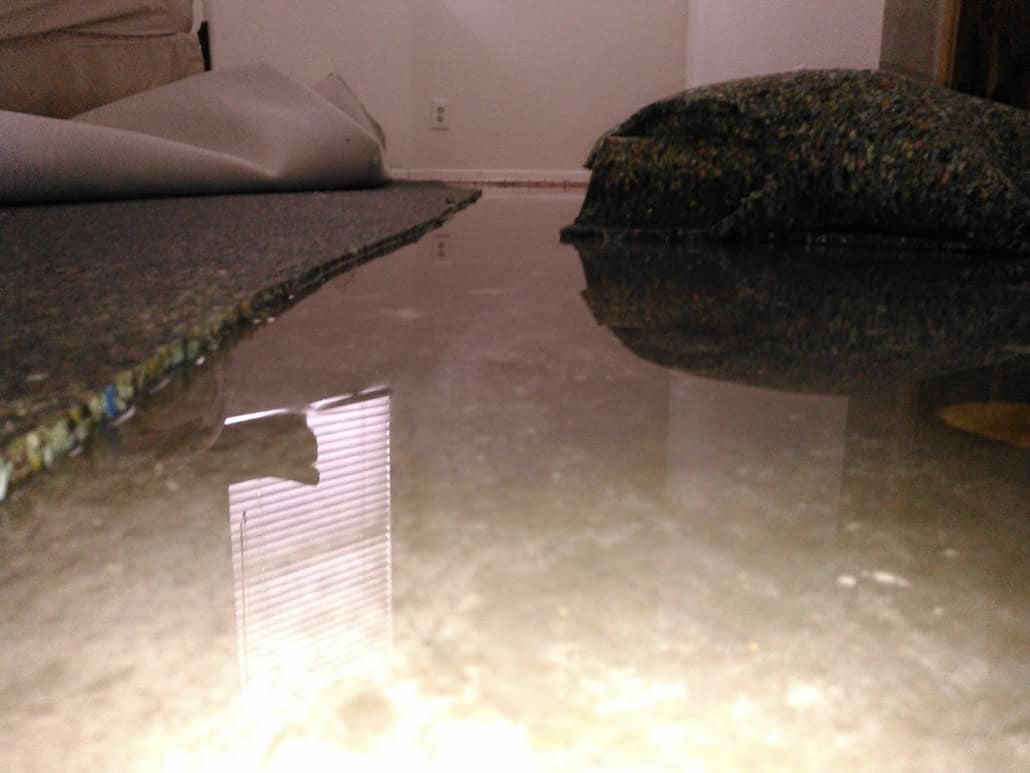
Water intrusion affecting flooring and surrounding building materials before extraction and structural drying began.
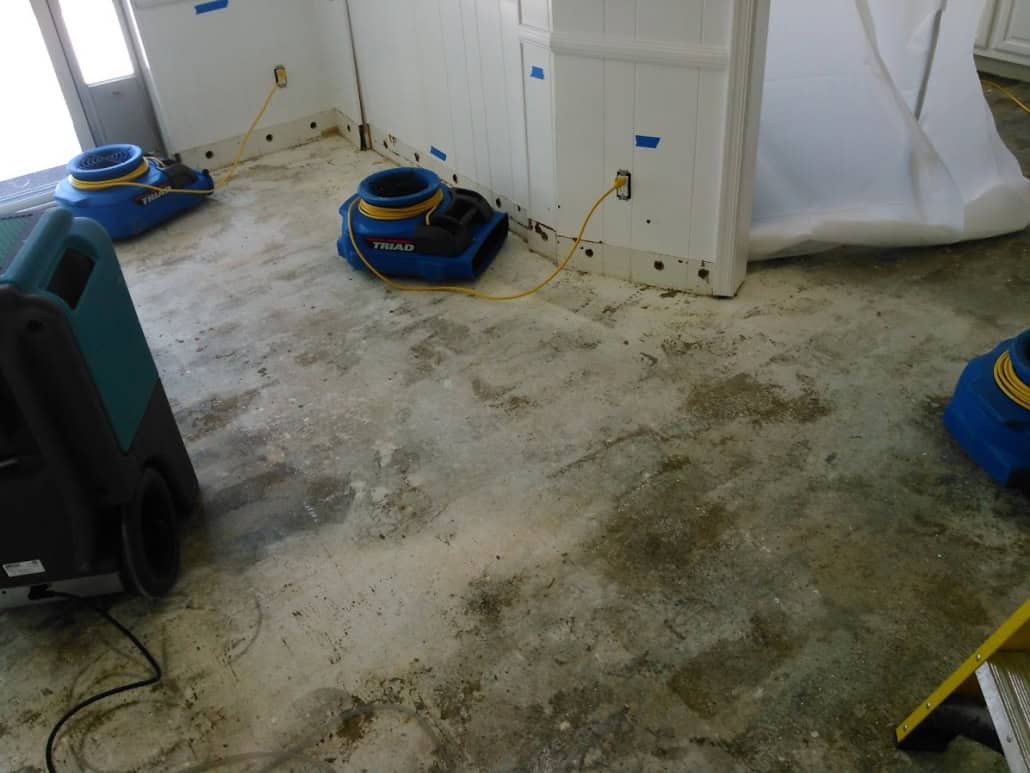
Commercial drying equipment and moisture monitoring used during the mitigation process.
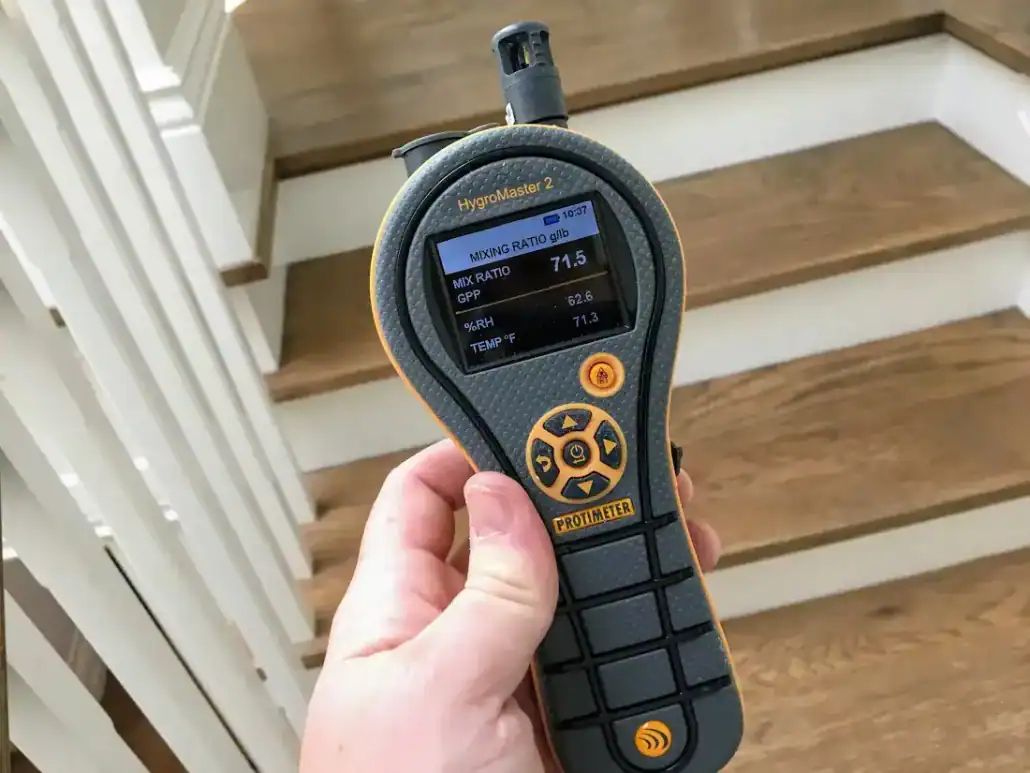
Moisture conditions monitored and documented throughout the structural-drying process.
Every emergency water cleanup project presents different challenges depending on the source of the intrusion, the materials affected, the extent of moisture migration, and how quickly mitigation begins. During emergency water cleanup in Newport Beach, early extraction, accurate moisture detection, controlled structural drying, and documented monitoring can help reduce additional material damage and support an organized restoration process.
Common Emergency Water Cleanup Questions in Newport Beach
Below are answers to some of the most common questions property owners ask about emergency water cleanup in Newport Beach, water extraction, structural drying, moisture detection, mitigation procedures, drying documentation, and the restoration process after unexpected water intrusion.
These questions can help homeowners, tenants, property managers, HOA communities, hotel operators, office buildings, retail businesses, and commercial property owners better understand what steps may be appropriate after leaks, flooding, slab leaks, appliance failures, roof intrusion, sprinkler-line failures, or other emergency water damage events.
+ How quickly should emergency water cleanup begin after a leak or flood in Newport Beach?
Emergency water cleanup should begin as soon as possible following a leak, flood, plumbing failure, or other water intrusion event. Water can migrate through drywall, flooring systems, cabinetry, insulation, and structural materials within a relatively short period of time. Prompt extraction, moisture detection, and structural drying help reduce additional damage and support a more efficient restoration process.
+ What happens during emergency water cleanup services?
Emergency water cleanup services typically include an inspection of the affected areas, water extraction, moisture detection, structural drying, humidity control, and ongoing monitoring. Commercial drying equipment and moisture measurement tools are used to help identify affected materials and support proper drying throughout the mitigation process.
+ Will my insurance cover emergency water cleanup?
Insurance coverage depends on the cause of the water damage, policy language, exclusions, deductibles, and claim-specific circumstances. Many covered water losses require prompt mitigation to help prevent additional damage. Property owners should review their policy and discuss coverage questions directly with their insurance carrier or adjuster.
+ How long does the structural drying process take?
The structural drying process varies depending on the extent of the water intrusion, the affected materials, humidity conditions, and the amount of moisture present throughout the structure. Some projects may dry relatively quickly, while larger losses can require several days of monitoring and equipment operation. Moisture readings are used throughout the process to help verify drying progress.
Schedule a Free Emergency Water Cleanup Inspection in Newport Beach
If your property has experienced a plumbing leak, slab leak, appliance failure, roof intrusion, flooding event, sprinkler-line failure, overflowing fixture, or other unexpected water intrusion, early extraction and structural drying can help limit moisture migration and additional material damage.
24/7 Restoration provides professional emergency water cleanup in Newport Beach, including water extraction, moisture detection, moisture mapping, structural drying, drying monitoring, and project documentation for residential and commercial properties.
- Free emergency water damage inspections and moisture assessments
- Standing-water extraction and moisture removal
- Structural drying, dehumidification, and moisture monitoring
- Residential, commercial, HOA, hospitality, and multifamily mitigation services
- Inspection photos, moisture readings, equipment records, and drying documentation
- Repair planning when affected materials require removal or replacement
Whether water affects a single room or has migrated through multiple areas, our team can evaluate surrounding materials, document moisture conditions, and develop an appropriate extraction and drying plan based on the circumstances of the loss.
Or call (949) 888-8409 to schedule a free emergency water cleanup inspection in Newport Beach.